


STASE
Static Analysis Guided Symbolic Execution for UEFI Vulnerability Signature Generation
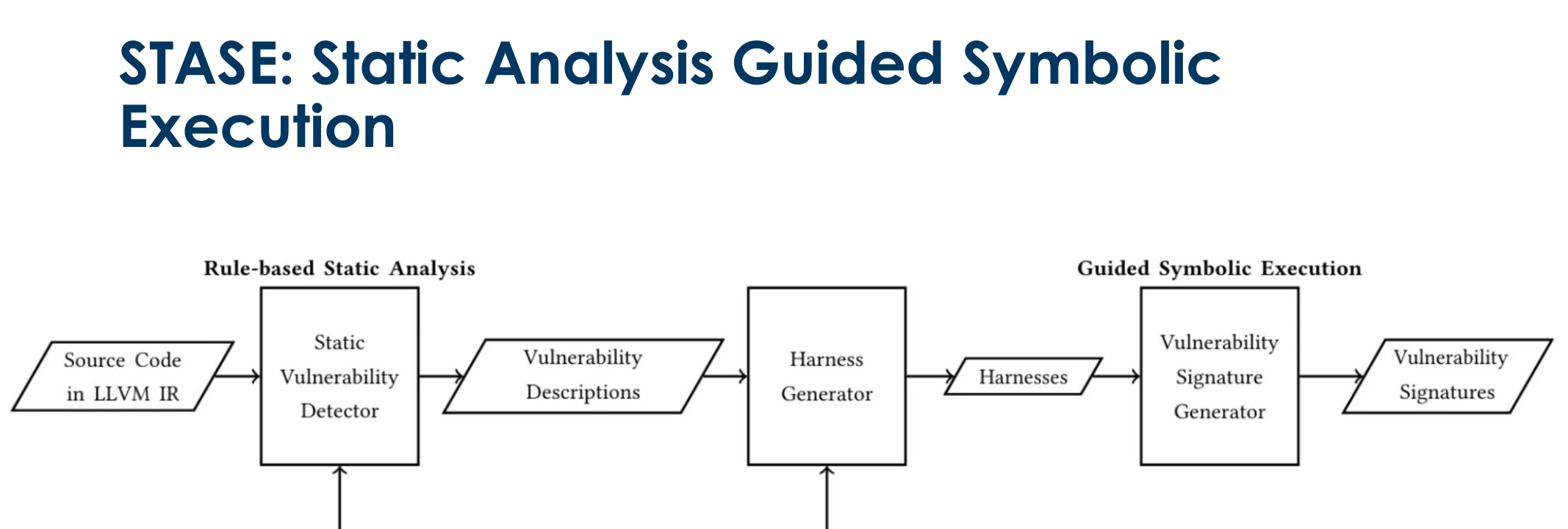
STASE pairs a rule-based static detector with guided symbolic execution. The static stage finds candidate vulnerabilities and describes them, a generated harness sets up the firmware environment, and symbolic execution turns each candidate into a precise vulnerability signature.
Why UEFI
UEFI firmware runs with higher privilege than the operating system, and exploits there can persist through system reboots, OS reinstallation, and even partial hardware replacement. Static analysis flags many candidates but is prone to false positives. Fuzzing and plain symbolic execution need harnesses and guidance that firmware rarely provides.
Technique
Vulnerability rules drive a static detector that produces vulnerability descriptions. From each description STASE generates a harness, covering the entry point, symbolic variables, stubs, and assertions. Guided symbolic execution then explores only the paths that matter and emits a vulnerability signature.
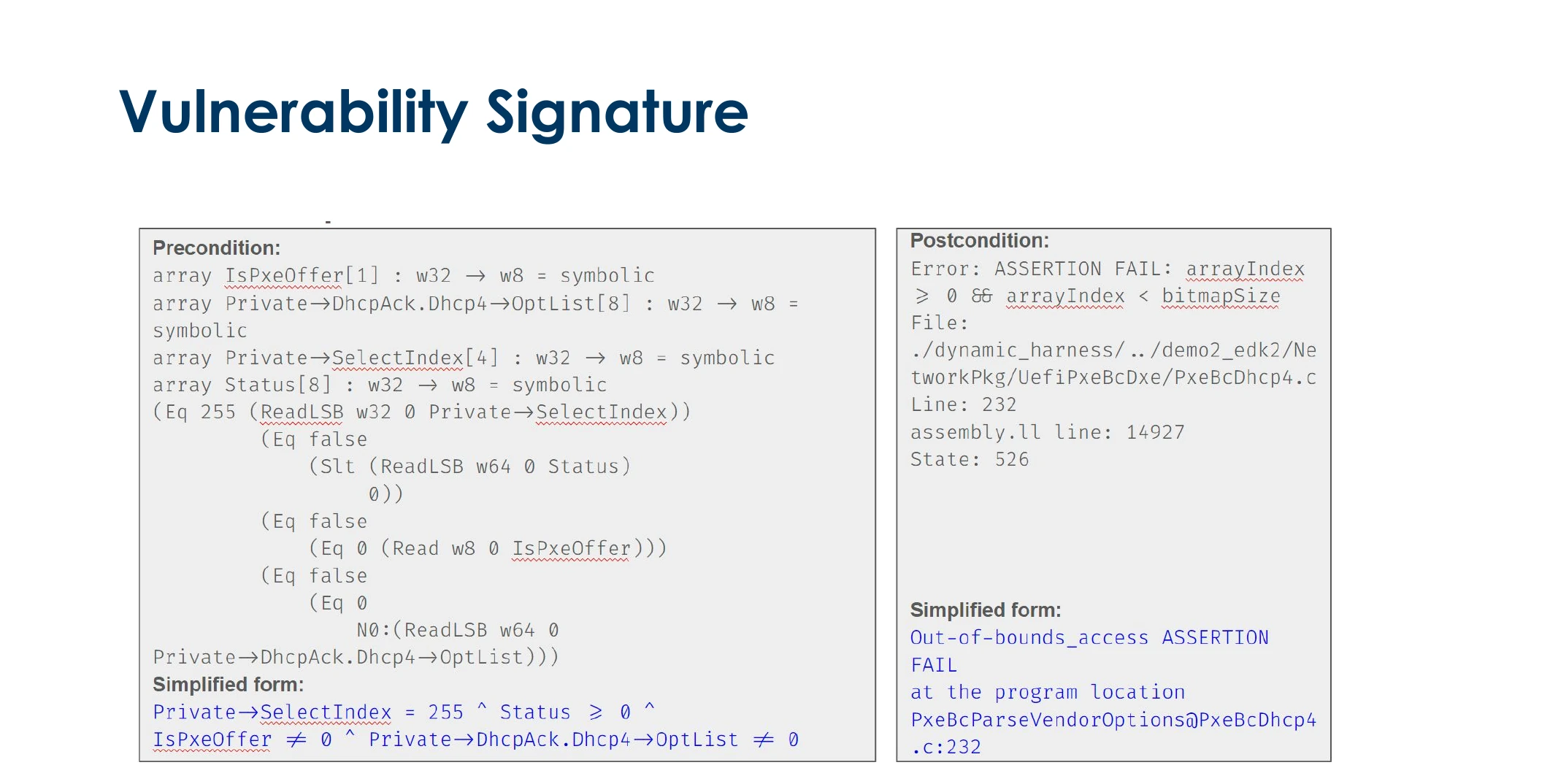
A signature is a precondition and a postcondition over symbolic state, so the vulnerability is characterized by evidence instead of a warning.
Evaluation
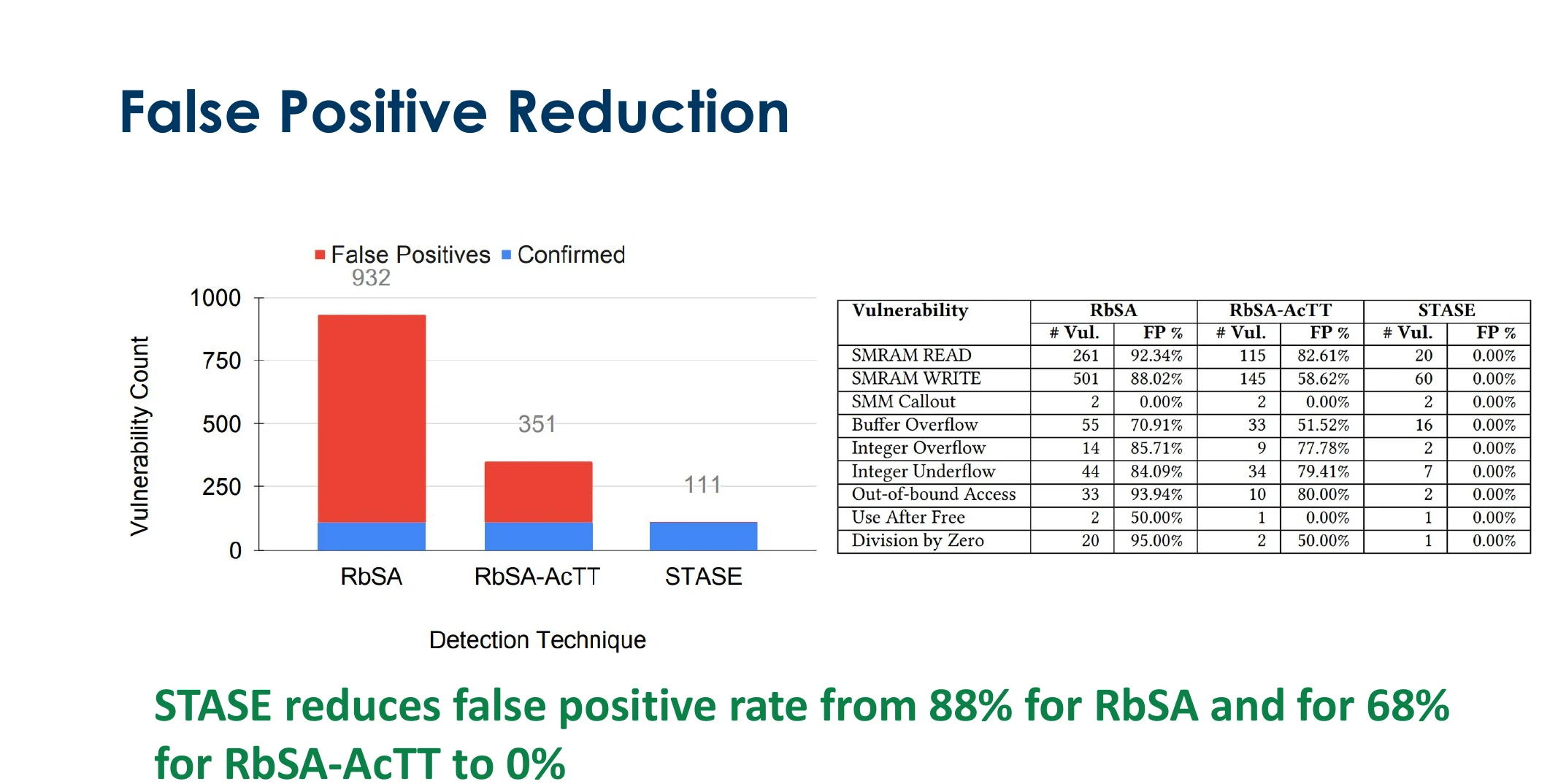
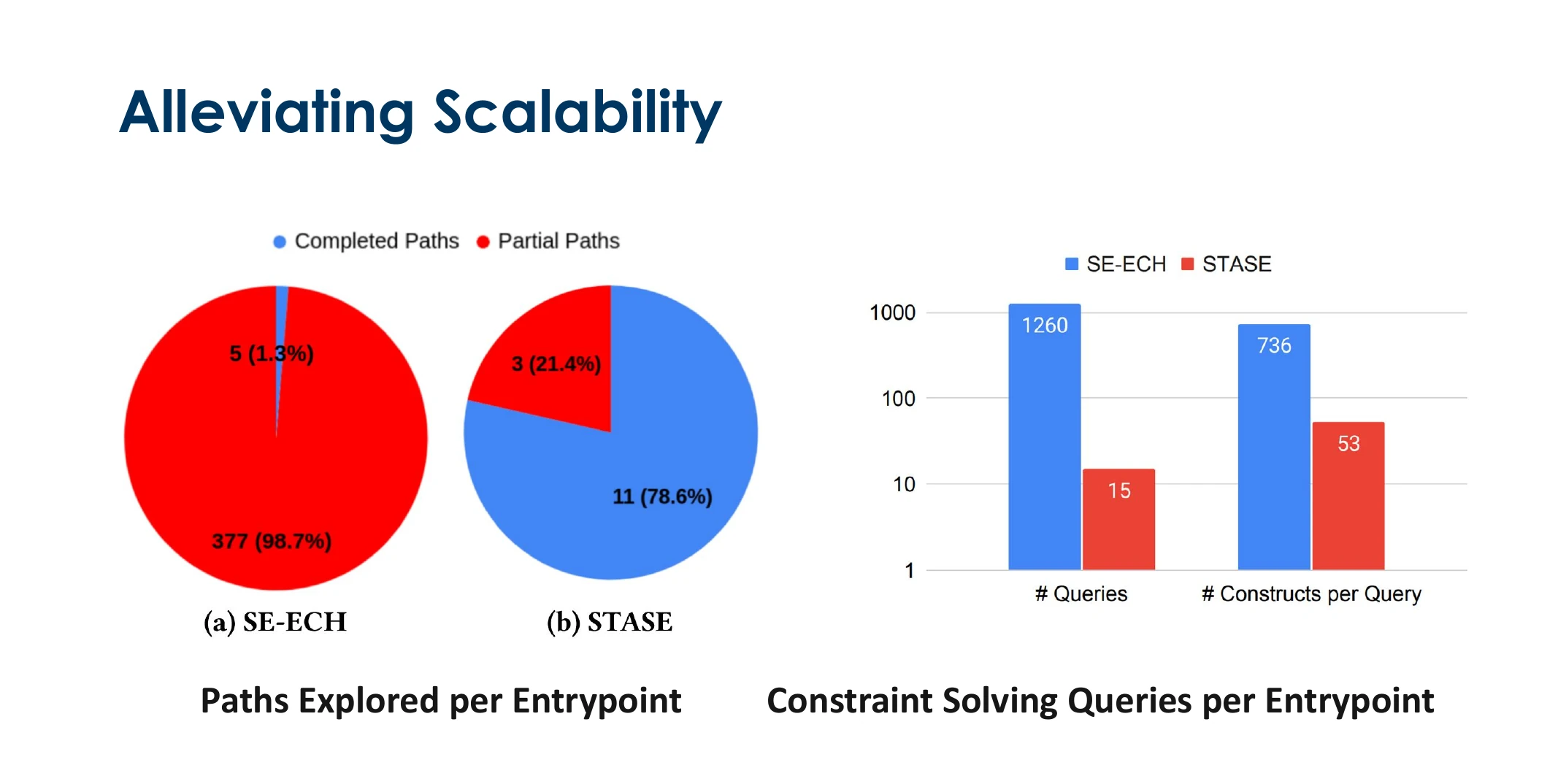
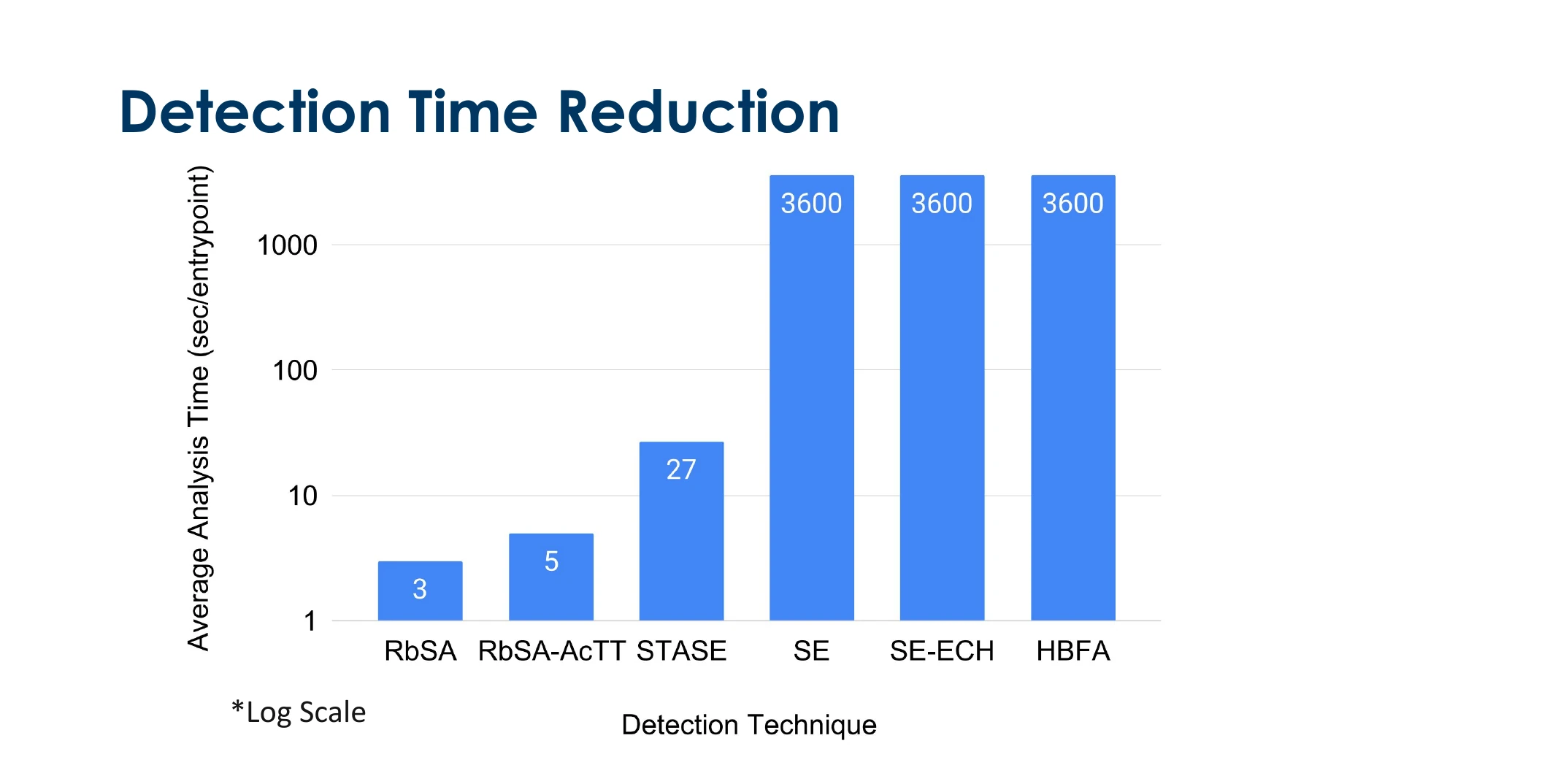
The benchmarks were EDK II SMM drivers, the EDK II network module, and DARPA HARDEN challenge sets. STASE removes the false positives of rule-based analysis and stays tractable where plain symbolic execution does not.
Impact in DARPA HARDEN
- July 2025. After Evaluation 3 at the end of Phase 2, STASE was recognized as having the highest usability, with the greatest range of outputs and a high degree of automation among participating tools.
- September 2025. The lab received a Phase 3 contract with about three times the funding, under which STASE is being transitioned into U.S. Army adversarial-testing workflows.
- October 2025. Live demo at the HARDEN PI meeting (video).