


PAGENT
Program Analysis Guided LLM Agent for Proof-of-Concept Generation
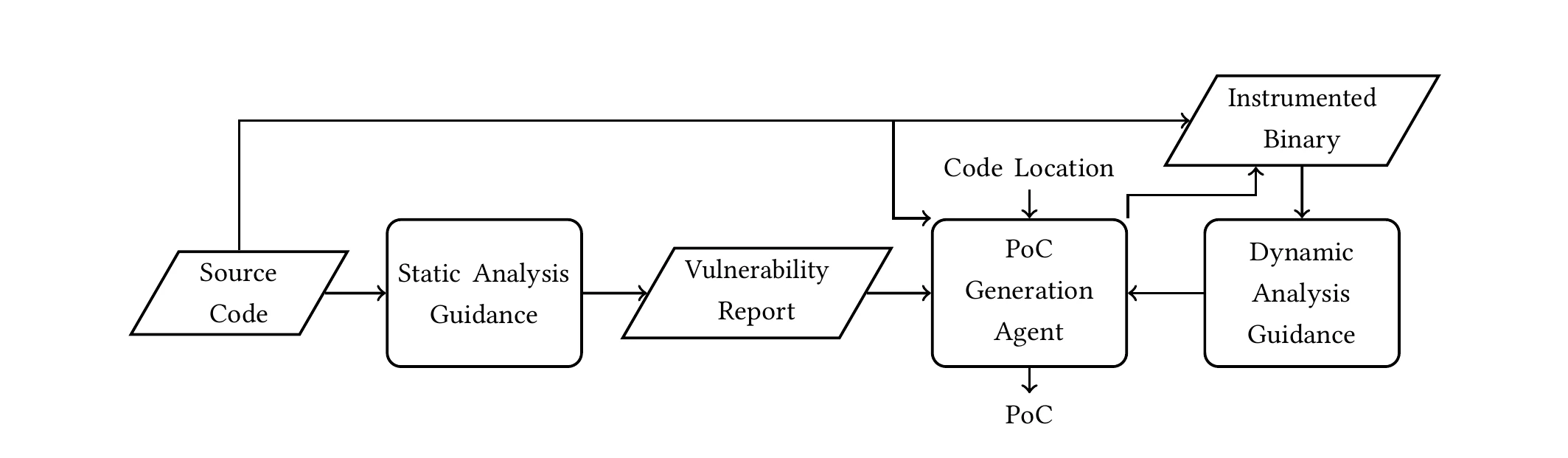
Maintainers who receive a vulnerability report need a proof-of-concept input that triggers the bug reliably. LLM agents alone succeed rarely. PAGENT gives the agent what it lacks, static guidance about the entry point, taint path, and vulnerable operation, and dynamic guidance from sanitizer profiling and coverage.
Approach
PAGENT takes the source code and a vulnerability location. Lightweight, rule-based static analysis produces a vulnerability report. An instrumented binary yields sanitizer-based profiling and coverage. Both feed a PoC generation agent that writes, runs, and refines candidate inputs until the sanitizer confirms the vulnerability or the budget is exhausted.
What the guidance looks like
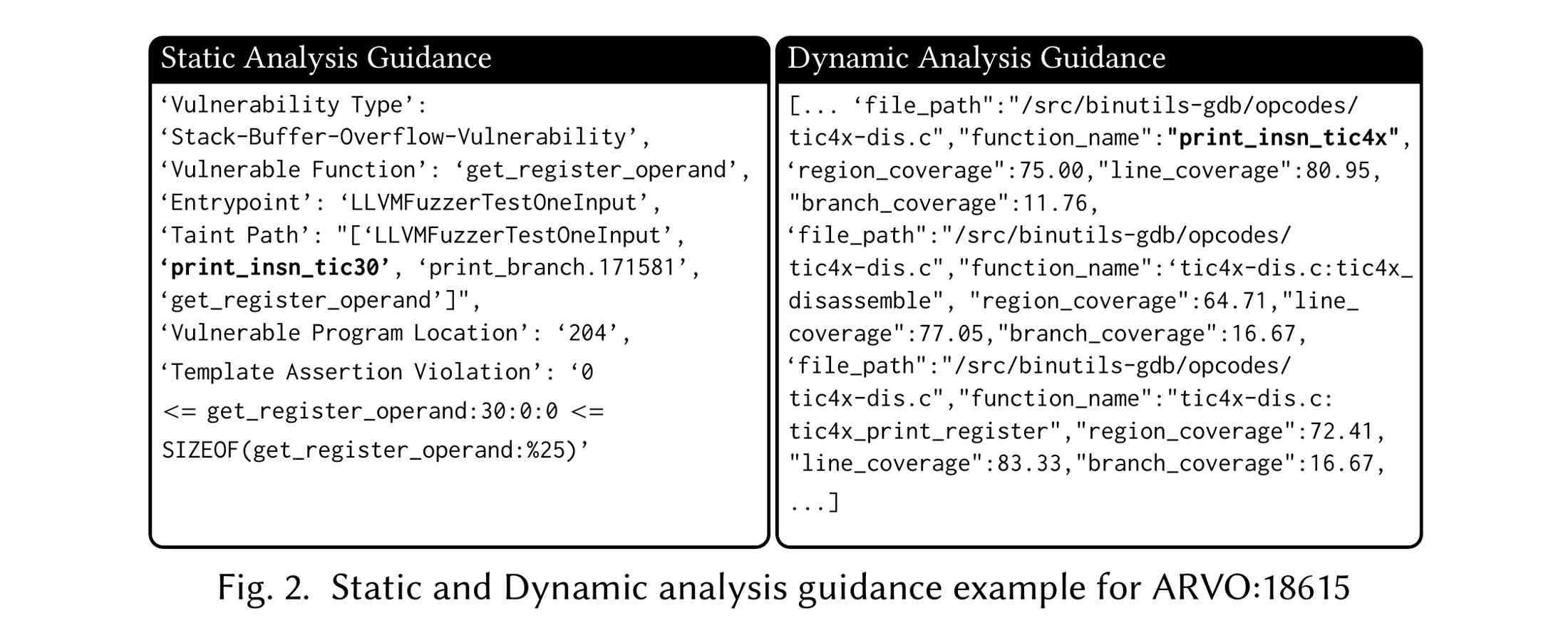
For a stack-buffer overflow in GNU Binutils (ARVO:18615), static guidance names the vulnerable function, entry point, taint path, and the violated assertion. Dynamic guidance reports which regions and lines the current input already reaches. The agent no longer has to guess where the bug is or whether its input gets there.
The agent loop
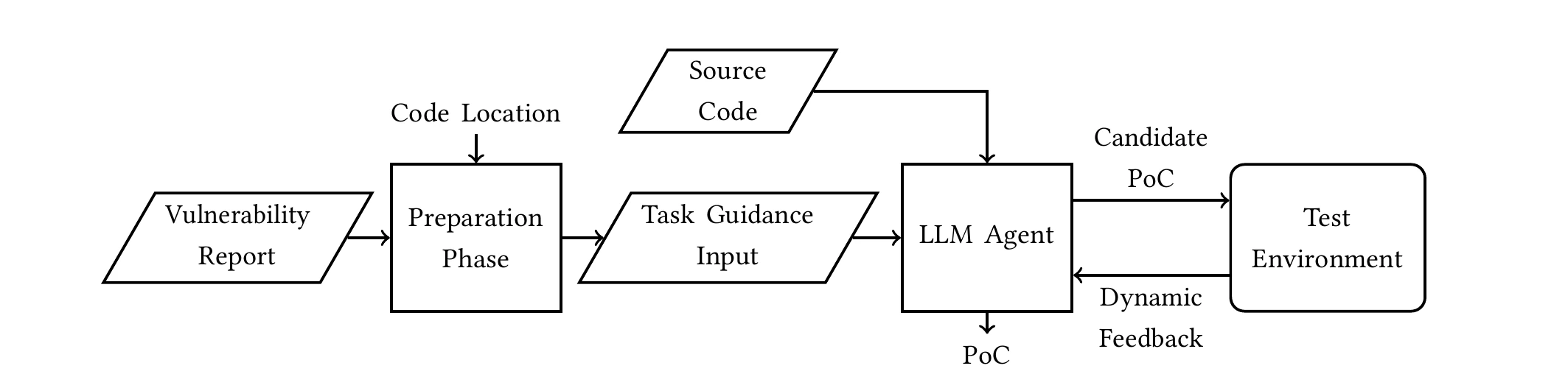
The PoC agent follows the CodeAct pattern. It prepares a workspace, proposes an input, executes it in the test environment, and receives the dynamic feedback. It loops until a PoC succeeds or the iteration budget is spent.
Role in the larger pipeline
PAGENT is one stage of the vulnerability discovery and analysis toolchain our lab deployed in DARPA HARDEN, alongside STASE, SAILOR, and CHAINER.